Tampilkan postingan dengan label aristotle. Tampilkan semua postingan

Aristotle Poetics Pdf Summary

Aristotle Poetics Pdf Summary

The origin and development of poetry. Summary chapter 23 the topic shifts away from the tragic to epic poetry in this chapter.



Pin On Teaching

Scholtz 1 our subject being poetry, i propose to speak not only of the art in general but also of its various subcategories and their respective capacities:

Aristotle poetics pdf summary. More specifically, it should be constructed of a beginning, middle, and end, and the plot must be unified. He/she creates things and teaches us to see something in his creation that we never saw before. However, recent work is now challenging whether aristotle focuses on literary theory per se or whether he focuses instead on

Aristotle never gives an explicit analysis of the term ‘imitation.’. Executive summary of poetics by aristotle 1/ the concept of “mimesis”, which refers to the ability that man to imitate what is other than himself, and get pleasure (ch. The poetics is in part aristotle’s response to his teacher, plato, who argues in the republic that poetry is representation of mere appearances and is thus misleading and morally suspect.

Its growth and development has been guided by unchanging, natural laws, and the poetics seeks to uncover these laws. Aristotle suggests that the simplest sorts of plot are complex plots that arouse fear and pity. Aristotle's poetics begins with the definition of imitation.

Rather than see the action in his head, aristotle says the poet must work out the action 'before his eyes.' Aristotle classifies greek words in an esoteric discussion of 'simple' and 'compound' terms, and the reader can sift through a majority of this analysis and focus instead on his definition of a few key literary terms. Summary plot overview aristotle proposes to discuss poetry, which he defines as a means of mimesis, or imitation, by means of language, rhythm, and harmony.

He thus concludes that three sorts of plot should be avoided. For aristotle, imitation is productive action. In language embellished with each kind of artistic ornament, the several kinds being found in separate parts of the play;

While some imitate by means of voice. In some cases, what aristotle says seems quite right, while in others his conclusions seem very limiting. Aristotle's poetics is the earliest surviving work of dramatic theory and first extant philosophical treatise to focus on literary theory in the west.this has been the traditional view for centuries.

The fundamental principle of the poetics is that a poem is a mimesis, that is, an imitation. First, we should always avoid plots that show an honest man going from happiness to misery, since such events seem more odious than fearful or. Aristotle was the great disciple of plato but his views are some what different than his master regarding poetry and ‘the poetics’ is a kind of covert reply to his great master.

A tragedy, in particular, is an imitation of an action. Brief notes on aristotle’s poetics at the beginning aristotle announces his intention both to treat of the poetic art and its kinds and to discuss what kind of plot is required for a good poem. As creatures who thrive on imitation, we are naturally drawn to poetry.

He thinks that poet is a creator, not a mere recording device (imitator). In the form of action, not of narrative. Thanks for exploring this supersummary study guide of “poetics” by aristotle.

“tragedy, then, is an imitation of an action that is serious, complete, and of a certain magnitude; Distinctions expressed by aristotle.] contents analysis of contents aristotle's poetics i ii iii iv v vi vii viii ix x xi xii xiii xiv xv xvi xvii 'imitation' the common principle of the arts of poetry. His poetics (335 bce) is a philosophical text on aesthetics, dramatic theory and the laws of literature, and at 2400 years old is.

2/ the concept of “catharsis”, which refers to a hypothetical process by which we would be purged of passion that you see represented in the work of art (ch. He explores each component part of poetry separately and addresses any questions that come up in the process. Of the structure of plot (muthos)1

'life's setting sun,' for instance, does not. Definition of the ludicrous, and a brief sketch of the rise of comedy. Poetics (peri poietikes, “on the art of poetry”) by aristotle translated by ingram bywater (oxford 1920) translation revised, and notes added, by a.

Poetics summary and study guide. Some arts imitate by means of colour and shape; A brief summary of aristotle’s “poetics”.

According to aristotle, epic poetry should follow the same dramatic principles as tragedy. Aristotle seems to be proceeding with the assumption that the same is true for poetry: Imitation is the common principle of all arts.

This paper provides an overview and commentary of aristotle's theory of poetry, of drama, and of narrative structure, as presented the. Aristotle had a profound impact on early thought and philosophy and is often referred to as the “father of western philosophy.” First is 'metaphor,' or the use of 'transference' to link two unlike things.

Criticism on aristotle’s poetics by faiza anis i would like to open this assignment with aristotle's famous definition of tragedy: In poetics, aristotle discusses poetry —both in general and in particular—and he also considers the effects of poetry on those who consume it and the proper way in which to construct a poetic plot for maximum effect. Aristotle’s approach to the phenomenon of poetry is quite different from plato’s.

Aristotle opens the poetics by defining poetry as mimesis or imitation. In 322 b.c.e, aristotle died at age 62 of natural causes on the greek island of euboea.
Aristotle Poetics Analysis Pdf

Incidents mean action, and tragedy is an imitation of actions, both internal and external. By plot aristotle means the arrangement of incidents.


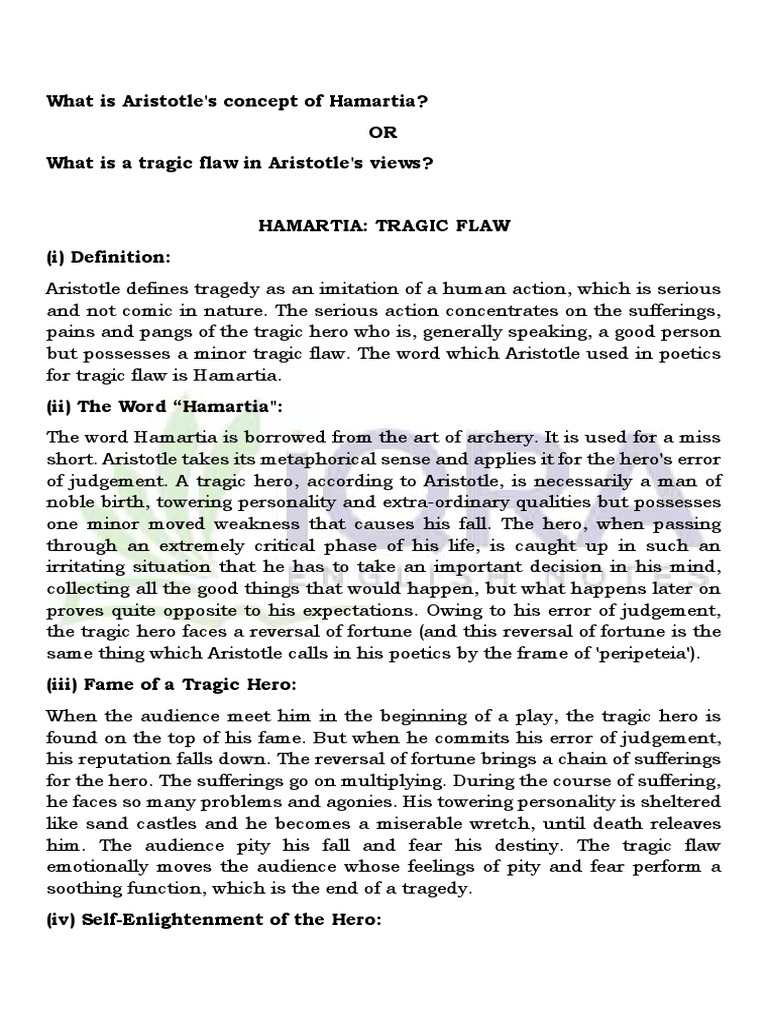
Aristotles Concept Of Hamartia Pdf Tragedy Psychological Concepts

V definition of the ludicrous, and a brief sketch of the rise of comedy;

Aristotle poetics analysis pdf. This is done by different means. The poetics of aristotle trans. Aristotle entered the academy but left when plato died mentor of alexander the great 3.

Aristotle had a profound impact on early thought and philosophy and is often referred to as the “father of western philosophy.” The poet represents men as worse than they are. He can represent men better than in real life based on material supplied by history and legend rather than by any living figure.

Michael sampson university of michigan sampson@umich.edu in the ninth chapter of the poetics, aristotle draws a sharp distinction between the genres of tragic poetry and history:1 διὸ καὶ φιλοϲοφώτερον καὶ ϲπουδαιότερον ποίηϲιϲ ἱϲτορίαϲ ἐϲτίν· ἡ µὲν γὰρ ποίηϲιϲ µᾶλλον τὰ καθόλου, ἡ δὲ. At the very beginning of the work aristotle gives his interpretation of the term poetics. However, recent work is now challenging whether aristotle focuses on literary theory per.

The origin and development of poetry. Aristotle writes also that he will address catharsis and an analysis of what is funny. 2b aristotle on the art of poetry opportunity to make her defence in plain prose and show that she translated by ingram bywater with a preface by gilbert murray oxford at the clarendon press first published 1920 reprinted 1925, 1928, 1932, 1938, 1945, 1947 1951, 1954, 1959.

School in athens, the lyceaum, was founded in 335 bc. Philosophers, classicists, and literary critics connect the poetics to taristoltle's psychology and history, ethics an politics. | find, read and cite all the research you.

He explores each component part of poetry separately and addresses any questions that come up in the process. In the poetics, aristotle writes that he will speak of comedy—but there is no further mention of comedy. Iv the origin and development of poetry;

Aristotle's poetics begins with the definition of imitation. Iv the origin and development of poetry. Distinctions expressed by aristotle.] contents analysis of contents aristotle's poetics i ii iii iv v vi vii viii ix x xi xii xiii xiv xv xvi xvii 'imitation' the common principle of the arts of poetry.

Pdf | this paper provides an overview and commentary of aristotle's theory of poetry, of drama, and of narrative structure, as presented the poetics. Iii the manner of imitation. Aristotle.] analysis of contents i ‘imitation’ the common principle of the arts of poetry.

He/she creates things and teaches us to see something in his creation that we never saw before. Astonishment, reversal (or peripeteia), recognition, and suffering. He writes in the poetics.

But he does not actually address any of those ideas. Born in 384 bc died 322 bc. Aristotle argues that, among the six formative elements, the plot is the most important element.

Aristotle’s poetics mann rentoy 2. 2a poetics · aristotle p. In poetics, aristotle discusses poetry —both in general and in particular—and he also considers the effects of poetry on those who consume it and the proper way in which to construct a poetic plot for maximum effect.

A tragedy, in particular, is an imitation of an action. Definition of the ludicrous, and a brief sketch of the rise of comedy. The fundamental principle of the poetics is that a poem is a mimesis, that is, an imitation.

He thinks that poet is a creator, not a mere recording device (imitator). I 'imitation' the common principle of the arts of poetry; In 322 b.c.e, aristotle died at age 62 of natural causes on the greek island of euboea.

Aristotle's poetics is the earliest surviving work of dramatic theory and first extant philosophical treatise to focus on literary theory in the west.this has been the traditional view for centuries. For aristotle, imitation is productive action. V definition of the ludicrous, and a brief sketch of the rise of comedy.

Universals, plot and form in aristotle’s poetics∗ c. Of the structure of plot (muthos)1 Ii the objects of imitation;

Iii the manner of imitation; Aristotle says that the objects of poetic imitation are “men in action”. Brief notes on aristotle’s poetics at the beginning aristotle announces his intention both to treat of the poetic art and its kinds and to discuss what kind of plot is required for a good poem.

Astonishment refers to a tragedy's ability to inspire 'fear and pity.' Aristotle was the great disciple of plato but his views are some what different than his master regarding poetry and ‘the poetics’ is a. Any art, he argues, is based on mimesis, that is, imitating nature.

Poetics (peri poietikes, “on the art of poetry”) by aristotle translated by ingram bywater (oxford 1920) translation revised, and notes added, by a. The surviving poetics is incomplete. This collection of essays locates aristotle's analysis of tragedy in its larger philosophical context.

All kinds of poetry, according to aristotle, differ from each other in three ways: Ii the objects of imitation. Scholtz 1 our subject being poetry, i propose to speak not only of the art in general but also of its various subcategories and their respective capacities: